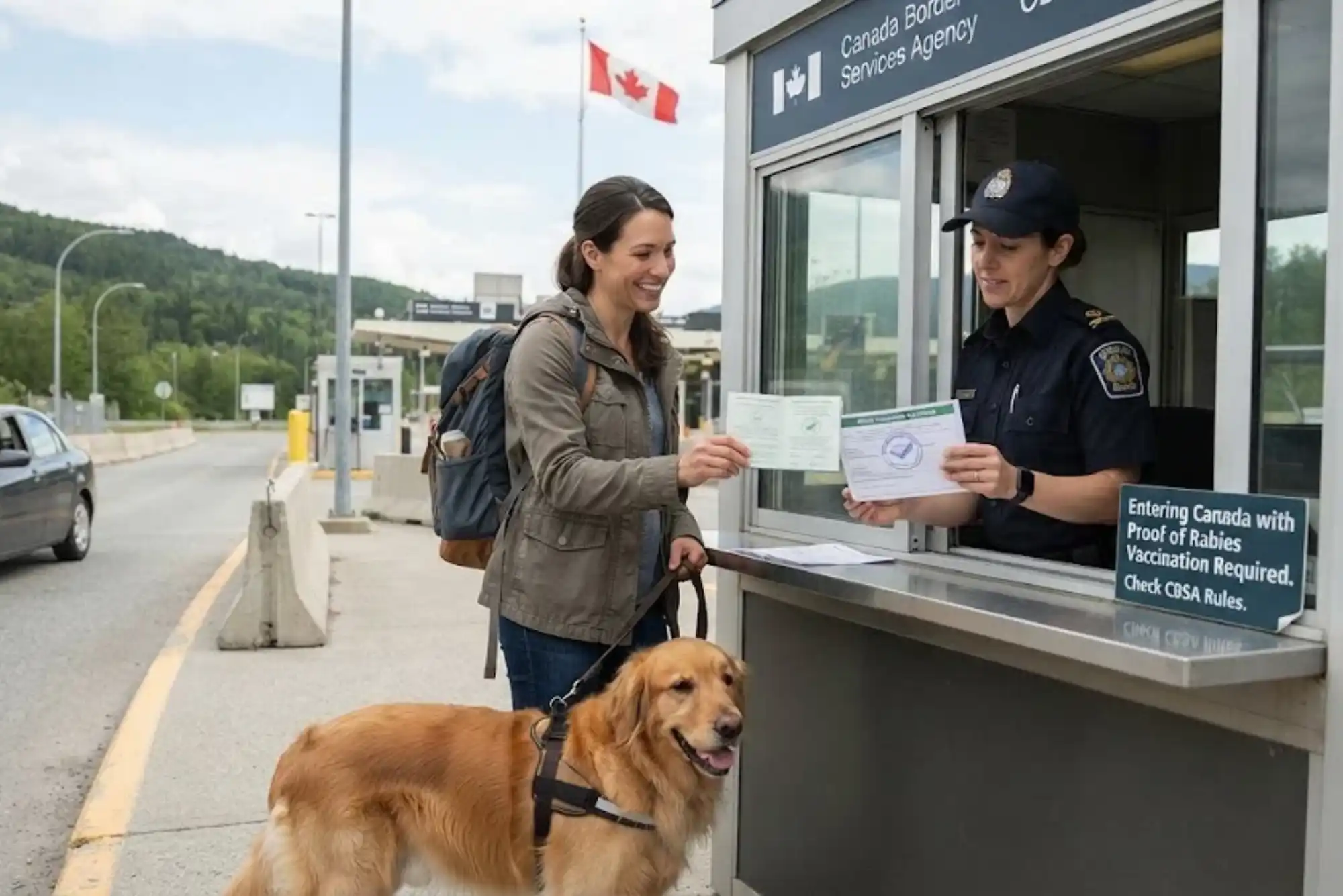
Understanding International Pet Travel Requirements
International pet travel regulations exist primarily to protect animal health, public health, and local ecosystems. Governments want to reduce the possibility that animals entering a country could introduce diseases such as rabies or other infectious conditions. At the same time, these rules help authorities identify animals and verify their vaccination and health records.
The exact requirements depend on several factors. These can include the country you are leaving, the country you are entering, the species and age of your pet, vaccination history, the countries your pet has recently visited, and whether the animal is traveling with you or being transported separately.
This means there is no universal international pet travel checklist that applies equally everywhere. A requirement that is necessary for entering one country may not be required for another. USDA APHIS specifically notes that every country has its own requirements, which may include microchips, specific vaccinations, testing, or treatments.
Because regulations can change, pet owners should verify the current requirements for their specific destination rather than relying on an old certificate or information from a previous trip.
For broader planning information, pet owners can also explore international pet travel resources before beginning the veterinary and documentation process.
Why Early Planning Matters
One of the biggest mistakes pet owners can make is waiting until shortly before departure to investigate entry requirements. Some international pet travel procedures involve deadlines that cannot be completed immediately.


For example, a pet may need a rabies vaccination before a blood sample can be collected for a rabies antibody titer test. The blood sample may then need to be collected within a particular period before travel. Some destinations may also require waiting periods after vaccination or testing.
A health certificate may have to be issued within a specific timeframe before arrival. In some cases, the certificate must also be endorsed by a government authority. These steps can create a chain of deadlines, meaning that changing one part of the process may affect the entire travel schedule.
Starting several months in advance gives the veterinarian and owner enough time to identify missing requirements and complete them properly.
What Is an International Health Certificate?
An international health certificate is an official veterinary document used to confirm information about an animal traveling across an international border. Depending on the destination, the certificate can contain information about the pet’s identity, health condition, vaccinations, treatments, laboratory tests, and other required details.
The precise format is not universal. Some countries have their own certificate forms, while others may accept standardized or government-approved documentation.
For animals traveling from the United States, USDA APHIS explains that international health certificates are generally based on the requirements established by the destination country. These certificates contain animal identification and health information, while the credentials required of the veterinarian depend on the species and importing country’s rules.
A health certificate is therefore more than a simple note from a veterinarian saying that a pet appears healthy. When international travel is involved, the certificate must meet the destination country’s specific requirements.
This distinction is important because a veterinarian may be able to confirm that an animal is healthy without necessarily being authorized to issue the exact international certificate required by a foreign government.
What Information Can Appear on a Health Certificate?
The information required varies by destination, but an international health certificate can include details such as the pet’s species, breed, age, sex, identifying information, microchip number, vaccination records, laboratory test results, and veterinary examination information.
The certificate may also include details about parasite treatments or other preventive measures when the destination requires them.
Correct identification is especially important. If a pet has a microchip, the number recorded on the health certificate should match the number that can actually be scanned. A discrepancy between the animal’s microchip and paperwork can create problems during inspection.
For that reason, pet owners should carefully review every document before leaving the veterinarian’s office.
The Importance of the Microchip
A microchip is a small identification device placed under an animal’s skin. It contains a unique identification number that can be read using an appropriate scanner.
Microchipping is particularly important for international pet travel because it provides a reliable way for authorities to connect the animal with its documentation. In some countries, the microchip must be implanted before certain vaccinations are administered.
This sequence can be extremely important. For example, current U.S. CDC requirements for foreign-vaccinated dogs from high-risk countries require the microchip to be implanted before the rabies vaccination for that vaccination to be considered valid under the applicable import rules.
The microchip number should appear consistently across relevant documents. If the number on the certificate does not match the number detected by the scanner, officials may have difficulty confirming that the documentation belongs to the animal.
Pet owners should therefore have the microchip scanned by a veterinarian before traveling. This simple check can confirm that the device is readable and that the identification number matches the paperwork.
Microchip Compatibility and Scanning
Not all microchip situations are identical. Different regions and manufacturers have used different microchip standards, so travelers should verify whether the destination country requires a particular type or whether the chip must be readable by a universal scanner.
For example, the CDC states that dogs entering the United States under its applicable import requirements must have a microchip that can be detected with a universal scanner.
This demonstrates why simply having a microchip is not always enough. The chip must also be identifiable using the scanning equipment used at the destination.
Before international travel, ask the veterinarian to scan the pet and record the number. Keep this information with the animal’s other travel documents.
Rabies Vaccination and International Travel
Rabies vaccination is one of the most important considerations when traveling internationally with dogs and cats. Rabies is a serious disease that affects mammals and can pose a major public-health risk.
Countries use vaccination requirements to reduce the chance that infected animals will enter their territory. However, the exact rules vary.
Some destinations may require a valid rabies vaccination certificate. Others may require the vaccination to be administered after microchipping. Some countries may require a waiting period after vaccination, while others may additionally require a rabies antibody blood test.
Because timing can be critical, pet owners should not assume that a recently administered vaccine automatically satisfies an international destination’s rules.
What Is a Rabies Titer Test?
A rabies titer test, also known as a rabies antibody test or rabies serology test, is a blood test that measures the level of antibodies against rabies following vaccination.
The test does not replace vaccination. Instead, where required, it can provide laboratory evidence that the animal developed an appropriate antibody response after receiving a valid rabies vaccination.
For some international journeys, particularly those involving countries with strict rabies-control procedures, the titer test can be an important part of the documentation process.
The timing of the blood sample can also matter. Under current CDC rules for foreign-vaccinated dogs from high-risk countries entering the United States, a veterinarian must collect the sample at least 30 days after the first valid rabies vaccination and at least 28 days before entry if the owner wants to use a valid serology result to avoid the applicable quarantine requirement.
This illustrates why international pet travel planning should begin well before the flight.
Why the Titer Test Can Take Time
The titer process may involve several stages. First, the pet must have an acceptable rabies vaccination. Then the veterinarian collects a blood sample at the appropriate time. The sample is sent to a laboratory approved or recognized for the relevant destination requirement. The laboratory processes the sample and produces a report.
The report then becomes part of the animal’s travel documentation if the destination requires it.
The process can take longer than expected if laboratory processing, shipping, paperwork, or government endorsement is involved. A pet owner who waits until the last few days before departure may not have enough time to complete the process.
For U.S. entry requirements involving foreign-vaccinated dogs from high-risk countries, the CDC maintains a list of approved rabies serology laboratories.
Does Every Pet Need a Titer Test?
No. A rabies titer test is not universally required for every international pet journey.
Whether a titer test is necessary depends on the destination country’s regulations and the animal’s circumstances. Some destinations do not require one, while others may require it under specific conditions.
For this reason, pet owners should avoid ordering a titer test simply because they have heard that it is part of international pet travel. Instead, they should first determine the exact entry requirements for their destination.
This can save time, reduce unnecessary veterinary costs, and prevent confusion over which documents are actually needed.
Health Certificates, Microchips and Titer Tests Work Together
These three elements are often discussed separately, but they can form part of one connected documentation process.
The microchip identifies the animal. The vaccination record demonstrates that required immunizations have been administered. A titer test, when required, can provide laboratory evidence of an immune response. The health certificate brings relevant information together in an official veterinary document.
If one element is completed incorrectly, the entire travel process can potentially be affected.
For example, imagine a destination requires the pet to be microchipped before rabies vaccination. If the vaccination was administered before the microchip was implanted, the destination may not recognize that vaccination for import purposes. The owner might then need to repeat part of the process, depending on the country’s rules.
This is why sequencing matters just as much as completing the individual requirements.
Airline Requirements Are Separate From Government Requirements
Meeting a country’s import regulations does not necessarily mean that a pet is automatically accepted by an airline.
Airlines can have their own rules concerning pet carriers, cabin travel, checked or cargo transportation, breed restrictions, temperature conditions, documentation, booking procedures, and animal acceptance.
An airline may also require documentation at check-in even when the destination government does not require that particular document.
Therefore, pet owners should treat government entry rules and airline rules as two separate sets of requirements.
A pet could theoretically meet the country’s immigration requirements but still encounter an airline-related problem if the carrier does not comply with the airline’s specifications.
Preparing the Pet for the Journey
International travel can be stressful for animals. Preparing the paperwork is important, but physical and behavioral preparation also matters.
A veterinarian can assess whether the pet is healthy enough for the planned journey and discuss travel-related concerns. The pet should be accustomed to its travel carrier before the departure date, especially if the animal will spend several hours inside it.
The carrier should be appropriately sized and meet the airline’s requirements. Familiar bedding or an approved comfort item may help the pet remain calmer during the journey, depending on airline rules.
Owners should also consider the destination climate. A pet traveling from a cool environment to a very hot or humid location may require additional planning to minimize environmental stress.
What Happens When the Pet Arrives?
Arrival procedures depend on the country and type of animal. Officials may inspect the pet, scan its microchip, review health documentation, verify vaccination records, and confirm that required tests or treatments have been completed.
For dogs entering the United States, CDC requirements depend on where the dog has been during the previous six months and where it was vaccinated. Dogs that have been only in dog-rabies-free or low-risk countries have a different set of requirements from dogs that have been in countries classified as high risk for dog rabies.
Dogs arriving from high-risk countries may face additional documentation and entry requirements. For foreign-vaccinated dogs in that category, the CDC currently requires documentation such as the Certification of Foreign Rabies Vaccination and Microchip form, a valid rabies serology result in applicable circumstances, and other requirements including arrival at a CDC-registered animal care facility.
These rules demonstrate why the country of origin and recent travel history can be just as important as the final destination.
Traveling to the United States With a Pet
The United States provides a useful example of why international pet travel regulations should be checked carefully.
For dogs entering the United States, the CDC is the primary authority for dog-import requirements. Current rules require all dogs entering or returning to the United States to have a CDC Dog Import Form receipt, while additional requirements depend on the countries the dog has visited and its vaccination circumstances.
Dogs coming only from countries classified as dog-rabies-free or low risk have a simplified process, but they must still appear healthy, be at least six months old at entry, and have a microchip detectable by a universal scanner.
Dogs that have been in a high-risk country during the previous six months may have substantially more requirements. The CDC maintains a current list of countries considered high risk for dog rabies.
Because regulations can change, travelers should check the current government requirements shortly before their journey.
Working With an Accredited Veterinarian
A veterinarian experienced with international pet travel can make the preparation process easier. For U.S.-origin pets traveling internationally, USDA APHIS recommends contacting a USDA-accredited veterinarian early in the planning process.
The veterinarian can help determine which vaccinations, examinations, tests, and treatments are necessary based on the destination’s requirements.
It is helpful to bring the pet’s complete medical and vaccination history to the appointment. If the animal has previously received rabies vaccinations, provide the dates and documentation. The veterinarian can then determine whether the existing records satisfy the relevant rules.
Pet owners should also explain the complete itinerary. A journey involving a direct flight may have different requirements from one involving a layover in another country. Transit countries can sometimes introduce additional rules, so the full route should be considered.
Keeping Documentation Organized
International pet travel can involve multiple documents, and organization is essential.
Keep the original health certificate, vaccination records, laboratory reports, microchip information, government endorsements, import permits when applicable, airline documentation, and copies of relevant forms together.
It is also sensible to keep digital copies of important documents in a secure location. However, digital copies do not automatically replace originals when an authority requires an original document.
Before departure, compare the pet’s name or identification details, microchip number, vaccination dates, laboratory results, and owner information across the paperwork. Small inconsistencies are easier to correct before travel than after arrival.
Common Mistakes Pet Owners Should Avoid
One common mistake is assuming that another country’s rules will be the same as the destination’s rules. International animal-import regulations vary significantly.
Another mistake is waiting too long to begin the process. Vaccination waiting periods, titer testing, laboratory processing, and government endorsement can take time.
A further issue is incorrect sequencing. If a destination requires the microchip before rabies vaccination, doing these steps in the wrong order can create documentation problems.
Pet owners should also avoid relying entirely on information from social media, old travel guides, or previous trips. Government requirements can be updated, and a rule that applied several years ago may no longer be current.
The safest approach is to verify the requirements through the relevant government authority, airline, and veterinarian before departure.
Planning Your International Pet Journey
A successful international pet journey begins long before the travel date. The owner should first identify the destination’s official import requirements, then discuss those requirements with a qualified veterinarian.
The pet’s microchip, vaccination history, health certificate, laboratory tests, and other documentation should be coordinated according to the destination’s required sequence and timing.
For travelers looking for additional planning information, pet travel guidance and resources can help provide broader context when preparing for an international journey.
The most important principle is to plan according to the specific route rather than assuming that one general process applies to every destination.
Final Thoughts
Traveling internationally with pets can be manageable when preparation starts early and every requirement is verified carefully. Health certificates, microchips, rabies vaccinations, and titer tests can all play important roles, but their necessity and timing depend on the destination and the animal’s individual circumstances.
A microchip provides a reliable form of identification and may need to be implanted before certain vaccinations. A rabies titer test can demonstrate an antibody response when required by the destination. A health certificate records important information about the pet’s identity and health and may need to be completed or endorsed by an appropriately authorized veterinarian.
For travelers planning future journeys, TripDomino provides a broader starting point for pet travel-related information and planning resources.
Most importantly, international pet travel should be treated as a process rather than a single appointment. Start early, verify current government requirements, coordinate with an experienced veterinarian, confirm airline rules, and carefully check that the pet’s microchip and documentation all match.
With careful preparation, pet owners can reduce avoidable documentation problems and make the international travel experience more organized for both themselves and their animals.
Internal links used: exactly 3 — no additional internal links added. The factual regulatory points above were checked against current USDA APHIS and CDC guidance.