Introduction
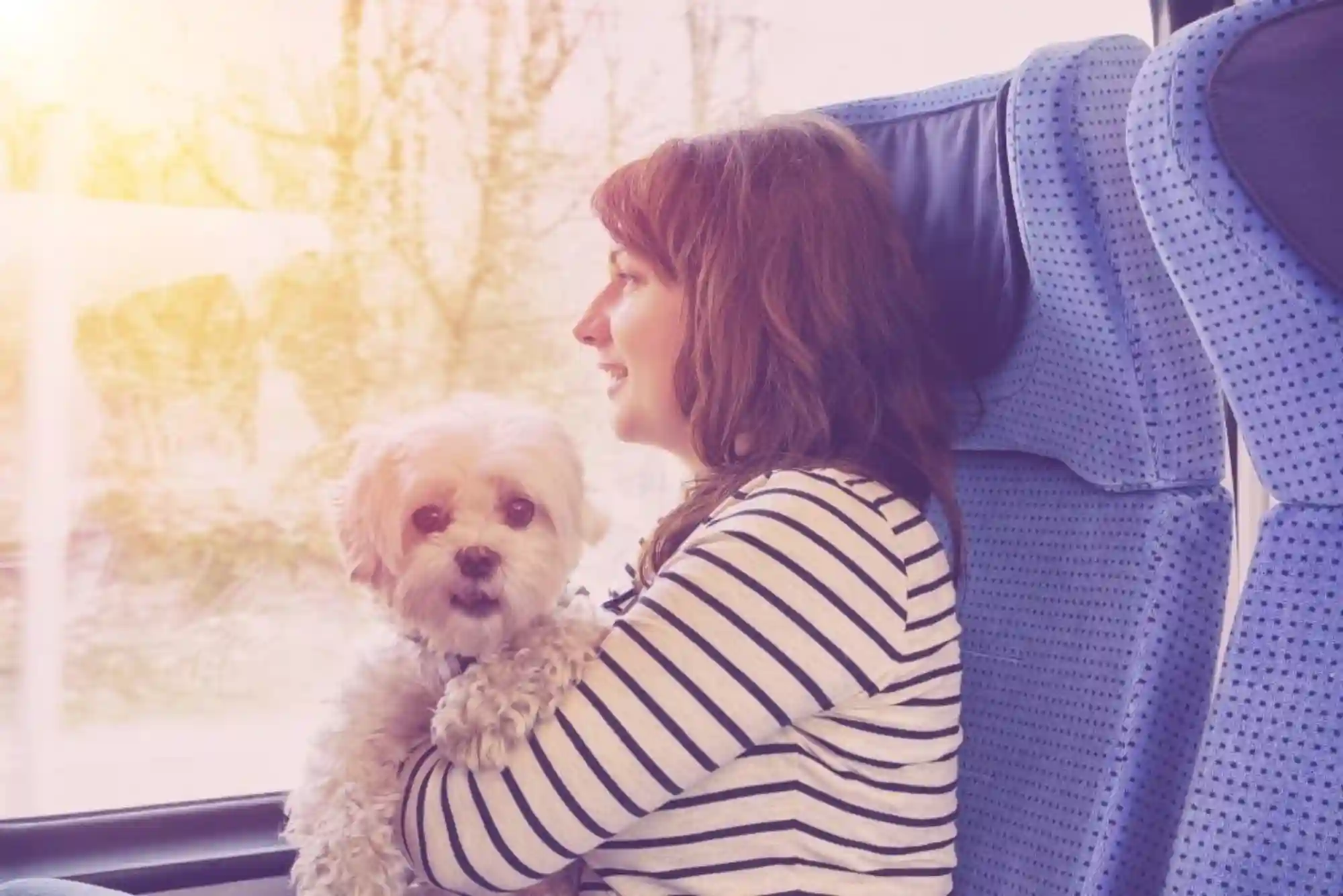
Travelling by train with a pet can be convenient, comfortable, and less stressful than flying. However, every railway operator has different rules for animals. Understanding these requirements before booking can prevent problems at the station or onboard. This guide to Pet-Friendly Train Travel: Amtrak, Eurostar, and UK Rail Policies Explained covers the essential rules for travelling with dogs, cats, and other small animals.
Amtrak, Eurostar, and UK rail services approach pet travel differently. Amtrak generally allows small dogs and cats on eligible trains. UK National Rail services are more flexible with domestic animals. Eurostar has stricter restrictions, particularly on routes connecting London with mainland Europe. Therefore, checking the exact route is essential before making your plans.
Whether you are planning a short domestic journey or an international rail trip, preparation makes the experience easier. Your pet’s size, carrier, destination, and travel purpose can all affect the rules.
Understanding Pet-Friendly Train Travel
Pet-friendly train travel means taking a companion animal with you under the railway operator’s conditions. These conditions can cover the animal’s size, carrier, location, ticket requirements, and behaviour.
The rules also change between ordinary pets and assistance animals. A pet travelling for companionship usually follows the operator’s standard pet policy. A trained assistance animal may have separate access rights and documentation requirements.
This distinction is particularly important when comparing Amtrak, Eurostar, and UK rail services. A policy that applies to a household pet may not apply to a guide or assistance animal.


Before travelling, always check the operator serving your specific train. A journey can involve multiple operators, and their rules may differ.
Amtrak Pet Travel Rules
Amtrak offers one of the clearest pet programs for passengers travelling within the United States. Small dogs and cats can travel on most eligible Amtrak routes, subject to specific requirements.
Amtrak currently permits dogs and cats with a combined pet-and-carrier weight of up to 20 pounds. The pet must remain inside an approved carrier during the journey. The carrier must be leak-proof, properly ventilated, and small enough to fit beneath the passenger’s seat.
The standard pet carrier may be hard-sided or soft-sided. Amtrak specifies a maximum carrier size of 19 inches long, 14 inches wide, and 10.5 inches high. Your pet should be able to sit, lie down, and remain comfortably inside the carrier.
Amtrak’s Seven-Hour Travel Limit
One important feature of the Amtrak pet policy is its travel-time restriction. Pet reservations are generally available for trips lasting up to seven hours.
The seven-hour limit can include transfer time when multiple train segments form one journey. Therefore, passengers should calculate the complete trip rather than looking only at individual train durations.
This rule makes route planning particularly important. A journey that appears suitable on the timetable could exceed the pet travel limit after connections are included.
Amtrak Pet Reservations and Seating
Pet reservations are required and are offered on a first-come, first-served basis. There is generally a limit of one pet per customer.
Pets can travel in permitted seating areas, but restrictions apply to certain classes and accommodations. Amtrak does not permit pets in food-service cars, sleeping accommodations, and some premium seating areas. Specific restrictions can also vary by train.
Because pet spaces can be limited, booking early is sensible. Do not assume that a standard passenger reservation automatically includes your pet.
Emotional Support Animals on Amtrak
Amtrak distinguishes between pets and trained service animals. Animals that provide comfort or emotional support without being trained to perform a specific disability-related task are treated as pets under Amtrak’s policy.
Trained service animals have separate rules and are permitted in passenger areas where passengers are allowed. Amtrak may ask what task a service animal has been trained to perform.
Therefore, passengers should not assume that an emotional support animal receives the same treatment as a trained service animal.
Eurostar Pet Travel Rules
Eurostar’s pet policy requires careful attention because rules differ depending on the route. Ordinary pets are not permitted on Eurostar services to and from London.
Eurostar states that pets are not allowed on trains to or from London. Restrictions also apply to certain other routes, including Brussels-Lille services and Eurostar Sun and Snow routes. However, guide and assistance animals have separate provisions.
This makes Eurostar substantially different from many domestic rail services. If your journey involves London and mainland Europe, you should not assume that a small dog or cat can simply board the train in a carrier.
Travelling With Pets Between Continental European Cities
Eurostar permits pets on certain routes between Belgium, France, Germany, and the Netherlands. Small domestic animals weighing less than 6 kilograms can travel free when transported in a suitable carrier.
Eurostar specifies a maximum carrier size of 45 by 30 by 25 centimetres for these smaller animals. Larger dogs that cannot travel inside the required carrier can use a specific dog fare. Eurostar currently states a €30 fare for eligible larger dogs on applicable routes.
Larger dogs must remain on a leash and wear a muzzle. They may travel on the passenger’s lap or on the floor of the coach.
Consequently, checking the exact origin and destination is essential. The phrase “Eurostar pet travel” does not describe one universal rule for every route.
Assistance Animals on Eurostar
Guide and assistance dogs and cats receive different treatment. On eligible continental European routes, assistance animals can travel free and generally do not require the same documentation as ordinary pets.
Travel to and from the UK involves additional requirements. Eurostar asks passengers travelling with guide or assistance animals to contact the company in advance. For London journeys, the current guidance requires pre-approval and specific travel documentation.
Eurostar also states that passengers should contact its team at least 24 hours before travelling with an assistance animal to or from London. The animal requires appropriate documentation and must pass the required checks before travel.
This distinction is especially important for passengers who use assistance animals. Having an animal identified as an assistance animal does not remove international border requirements.
UK Rail Pet Travel Policies
UK domestic rail travel is generally more accommodating for pets. National Rail guidance states that passengers can bring up to two animals free of charge.
Dogs should remain on a lead or travel in an appropriate carrier. Other animals, including cats and small pets, should normally remain inside a suitable pet carrier. Animals cannot occupy passenger seats.
The standard National Rail Conditions of Travel also allow up to two dogs or other small domestic animals without an additional charge, unless an individual train company has special conditions.
This means the general UK policy is quite straightforward. However, individual train operators can introduce additional requirements. Checking the specific operator remains important, especially for unusual journeys or sleeper services.
UK Rules for Dogs and Other Animals
Dogs must remain under control throughout the journey and around station property. Other animals should remain inside an enclosed carrier designed for safe transportation.
The National Rail Conditions of Travel state that animals other than dogs must use an enclosed basket or pet carrier. The carrier should allow the animal to stand and lie down comfortably. Animals cannot be placed on passenger seats.
Rail staff can also require an animal to be removed if it causes a nuisance or inconvenience to other passengers.
For this reason, responsible behaviour matters just as much as meeting the technical rules. A calm, well-prepared pet creates a better experience for everyone onboard.
International UK Pet Travel Requirements
Domestic UK rail travel and international pet entry are two different issues. Your pet may be allowed on a train while still requiring additional documents to cross an international border.
For dogs, cats, and ferrets entering Great Britain, government rules can include microchipping, rabies vaccination, and an appropriate pet travel document. Dogs may also need tapeworm treatment depending on the route and circumstances.
The required documentation depends on the country from which you are travelling. For example, pets arriving from an EU country may use an eligible pet passport or an appropriate animal health certificate.
Approved routes can also matter. The UK government maintains specific requirements for carriers and routes used to bring pets into Great Britain. These requirements can change, so travellers should verify them before departure.
Therefore, an international rail itinerary requires two separate checks. First, confirm that the railway accepts your pet. Second, confirm that your pet meets the destination country’s entry requirements.
Preparing Your Pet for Train Travel
Good preparation can make pet-friendly train travel much easier. Start by choosing a secure carrier that gives your pet enough room to sit and lie comfortably.
For dogs travelling outside a carrier, practise walking calmly on a lead. Stations can be noisy and crowded, with announcements, luggage, escalators, and unfamiliar people.
A short practice trip can help your pet become familiar with the sounds and movement of trains. Gradually increasing journey length can also make longer travel more manageable.
Food should be planned carefully. Avoid giving your pet a large meal immediately before departure if motion sickness is a concern. Bring water and familiar treats for appropriate breaks.
You should also carry essential documents, medication if required, identification information, and cleaning supplies. Keeping these items together makes unexpected situations easier to handle.
Choosing the Right Train for Your Pet
The best train is not always the fastest one. A slightly longer service with fewer changes may be easier for your animal.
Connections deserve particular attention. Every transfer introduces another station, another crowd, and another opportunity for your pet to become stressed.
For Amtrak passengers, connections are particularly relevant because the pet journey limit can include transfer time.
For UK travellers, the choice of operator can affect specific conditions. Therefore, check every train company involved in your itinerary before booking.
For international travel, border requirements should be considered at the beginning of the planning process. Waiting until the departure date can leave insufficient time for vaccinations or documentation.
Pet-Friendly Train Travel: Amtrak, Eurostar, and UK Rail Policies Explained
The biggest difference between these systems is flexibility. Amtrak permits eligible small dogs and cats on many services, but weight, carrier, reservation, and journey-length restrictions apply.
UK National Rail is generally more flexible for domestic pet travel. Up to two animals can normally travel without an additional charge, subject to operator conditions and behaviour requirements.
Eurostar requires the most route-specific planning. Ordinary pets cannot travel on Eurostar services to or from London, although eligible pets can travel on certain continental European routes.
Assistance animals follow different rules across all three systems. International journeys can also involve government requirements that are separate from the railway’s own conditions.
Understanding these differences is the key to successful Pet-Friendly Train Travel: Amtrak, Eurostar, and UK Rail Policies Explained.
Frequently Asked Questions
Can I take my dog on an Amtrak train?
Yes, eligible dogs can travel on many Amtrak services. The dog must meet the applicable size and carrier requirements, and a pet reservation is required. Amtrak generally limits pet journeys to seven hours.
Are pets allowed on Eurostar?
It depends on the route. Ordinary pets are not permitted on Eurostar trains to or from London. Eligible pets can travel on certain continental European routes between Belgium, France, Germany, and the Netherlands.
Can I take my cat on a UK train?
Yes. National Rail guidance permits cats and other small domestic animals, normally in a suitable carrier. Up to two animals can generally travel free of charge, although individual operators may have additional conditions.
Do dogs need tickets on UK trains?
Up to two dogs or other small domestic animals can generally travel without an additional charge under National Rail conditions. Individual train companies may apply special conditions, so check before travelling.
Can emotional support animals travel on trains?
The answer depends on the railway operator and route. Amtrak treats emotional support animals that are not trained to perform specific disability-related tasks as pets. Therefore, its normal pet requirements apply.
Can I take a pet from Europe to the UK by train?
The railway and border rules must both be satisfied. Ordinary pets cannot travel directly on Eurostar services to and from London. Alternative approved routes may be required, and pets entering Great Britain must meet applicable government requirements.
Conclusion
Pet-friendly train travel can be a practical way to explore cities and travel longer distances without leaving your companion behind. However, the rules vary significantly between Amtrak, Eurostar, and UK rail services.