Introduction
Taking your dog on a road trip can be fun, but an unrestrained pet can become a serious safety hazard during sudden braking or a collision. The right dog seat belts and crash-tested car hammocks can help keep your dog secure while reducing distractions for the driver.
However, shopping for pet car safety gear is not as simple as choosing a product with the words “heavy duty” or “crash tested” on its packaging. Independent testing matters. The Center for Pet Safety (CPS) has repeatedly shown that some products marketed as safety restraints can perform poorly during simulated crashes. Its research has helped establish more meaningful ways to evaluate canine travel products.
For backseat travel, the safest approach is to choose a restraint designed specifically for vehicle use, follow the manufacturer’s installation instructions, and check whether independent testing supports the product’s safety claims. A hammock can add useful protection against falling into the footwell, but it should not automatically be treated as a crash restraint.
Why Dog Car Safety Matters
Dogs can move around the vehicle surprisingly quickly. During normal driving, an excited dog may climb between seats, lean against windows, or move toward the driver. Even without a crash, this behavior can cause dangerous distractions.
The bigger concern comes during sudden deceleration. A loose dog continues moving forward when the vehicle stops. Depending on the dog’s size and speed, that movement can create substantial forces.
CPS research has demonstrated why restraint design matters. Its early canine restraint testing used specially designed crash-test dogs rather than live animals. The testing was designed to evaluate both protection for the dog and potential risks to human passengers.


A properly designed restraint can also reduce the chance that a dog becomes a projectile inside the vehicle. That makes pet restraint a passenger-safety issue, not simply a matter of keeping the dog comfortable.
What Makes a Dog Seat Belt Safe?
A dog seat belt is not necessarily safe just because it clips into a vehicle’s seat-belt system. The quality of the harness, connection points, stitching, hardware, and restraint geometry all matter.
The most important distinction is between a vehicle-rated canine restraint and an ordinary walking harness connected to a generic tether. A walking harness is designed for everyday movement, not necessarily for crash forces.
CPS specifically warns against relying on extension tethers. According to its research and safety guidance, these devices can allow excessive movement before suddenly stopping the dog, potentially creating dangerous forces on the animal’s body.
This is why a short, purpose-built restraint paired with a properly engineered crash-tested harness can be fundamentally different from a basic leash attachment.
Best Dog Seat Belts for Backseat Travel
One of the most important names in independently tested canine vehicle safety is Sleepypod. Its Clickit range has undergone CPS certification testing, with the current CPS listing showing testing in November 2022 and a five-star certification result. The listed range covers small through extra-large sizes, with testing including a dog model weighing 110 pounds.
The Sleepypod Clickit design is built around a harness rather than simply attaching a leash-style strap to a dog’s collar. Its purpose is to control the dog’s movement during vehicle travel while distributing forces through the harness.
Earlier CPS research also found strong performance from Sleepypod’s Clickit Utility harness during crash testing. The 2013 study reported that the test dog remained restrained during every test and remained on the seat during the tested scenarios.
That historical testing is useful context, but buyers should still verify the current product model and certification status before purchasing. Product designs can change, and an older test result does not automatically apply to every newer version.
Are Crash-Tested Car Hammocks Actually Safe?
A car hammock can be useful, but the word “hammock” creates an important distinction.
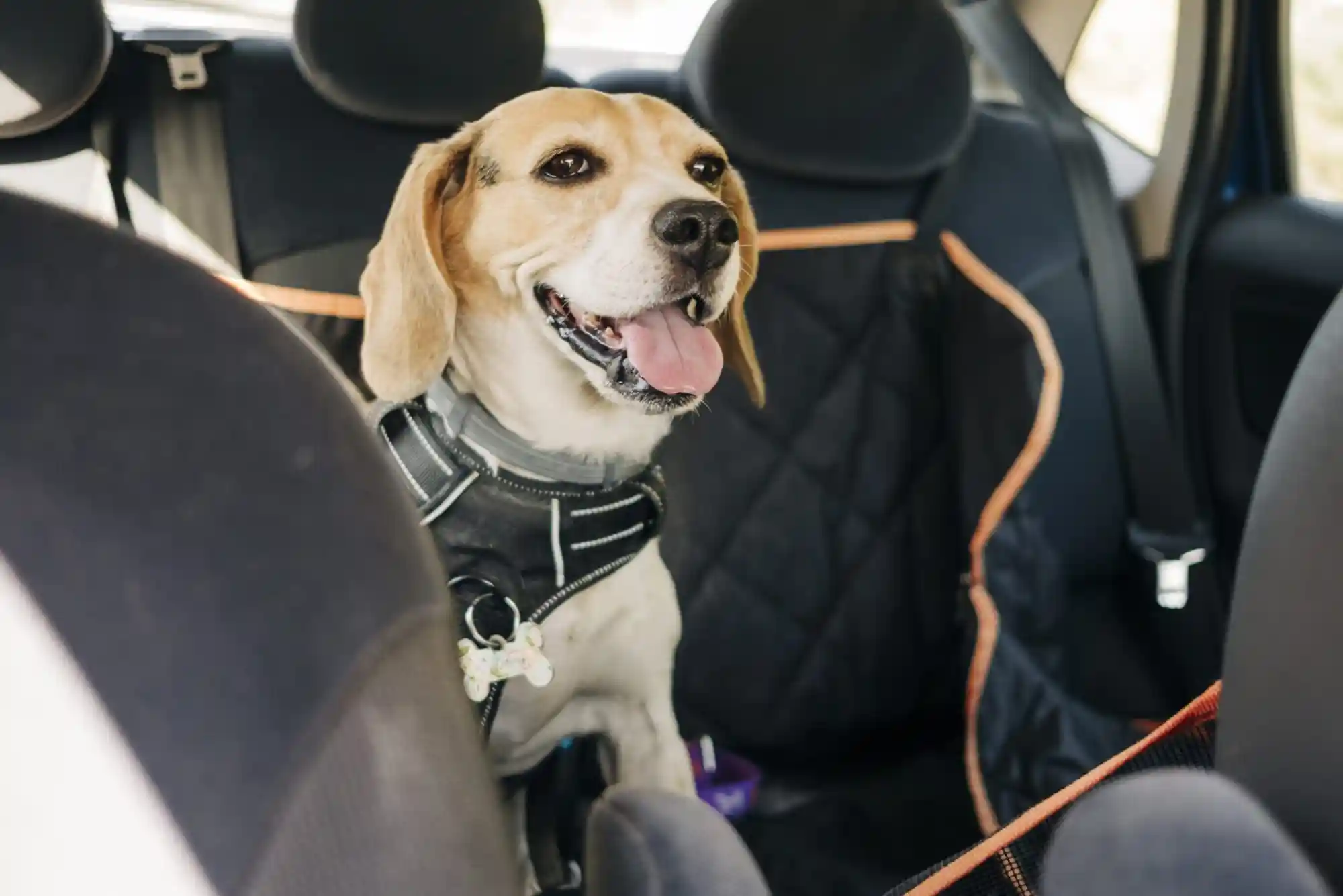
Most backseat hammocks are designed primarily as protective covers and containment systems. They stretch between the front and rear headrests, creating a barrier that can stop a dog from dropping into the footwell. They can also protect seats from fur, mud, scratches, and spills.
But a hammock is not automatically a crash restraint.
For true crash protection, the dog needs an appropriate restraint system that controls forward movement. A fabric hammock alone generally should not be treated as equivalent to a crash-tested harness or certified carrier.
This distinction is particularly important because CPS emphasizes that a product’s structural strength alone does not prove crash protection. In its testing methodology, products first undergo preliminary strength testing before qualifying for more advanced crash testing. Passing the preliminary stage means a product has demonstrated strength under that particular test; it does not, by itself, prove that the product will protect a pet during a collision.
Therefore, if you purchase a car hammock, think of it as an additional layer of backseat containment rather than automatically assuming it replaces a proper restraint.
How to Choose a Crash-Tested Dog Car Hammock
When shopping for a hammock, start by examining what the manufacturer actually claims.
A good hammock should fit securely across the vehicle’s rear seating area. The headrest straps should be adjustable, the material should resist tearing, and the attachment points should be reinforced.
A useful feature is a mesh or solid barrier between the front and rear seats. This can discourage the dog from climbing toward the driver.
Water-resistant material is also practical for dogs that become wet or dirty after outdoor activities. However, comfort and convenience should remain secondary to restraint safety.
If the hammock is marketed as “crash tested,” look for details about who performed the testing, what protocol was used, what vehicle setup was involved, and what weight of test dog was used. A vague “tested for safety” statement provides much less information than independently verified testing.
Why Independent Crash Testing Matters
The phrase “crash tested” has become common in pet-product marketing. The problem is that consumers may assume all crash tests are equivalent.
They are not.
CPS explains that pet travel products historically lacked standardized performance requirements comparable to those used for human passenger restraints. Its testing programs were developed partly to address this gap.
Independent certification provides another layer of confidence because the testing organization is separate from the manufacturer.
The current CPS Certified program states that certified products must meet independently developed safety standards and testing requirements. CPS also says it does not accept funding from pet-product manufacturers for its certification program.
For consumers, this means the testing source matters almost as much as the product itself.
Dog Seat Belt vs. Car Hammock: What’s the Difference?
The two products serve different purposes.
A dog seat belt or crash-tested harness is intended to restrain the dog. Its primary job is to limit movement and keep the animal secured in a predictable position.
A car hammock is mainly designed to create a safer and cleaner backseat environment. It can prevent a dog from slipping between seats and can create a physical barrier that discourages movement into the front cabin.
For many owners, combining appropriate restraint equipment with a well-fitted backseat hammock can provide practical everyday protection. The important point is that the hammock should not be mistaken for the primary crash restraint unless the specific product has credible evidence demonstrating that capability.
How to Properly Secure a Dog in the Backseat
Correct installation is just as important as buying the right equipment.
First, choose the restraint according to your dog’s actual size and weight. Do not assume that a large harness is automatically safer for a small dog or that one size will fit every breed.
The harness should fit securely without restricting normal breathing or movement. Follow the manufacturer’s adjustment instructions carefully.
Position the dog in the backseat rather than the front passenger seat. CPS specifically recommends securing pets in the back seat and avoiding extension tethers.
Never connect a vehicle restraint to a dog’s collar. CPS’s earlier research specifically warned that collars and ordinary walking harnesses are inappropriate connection points for crash-safety applications.
Before every journey, inspect straps, buckles, stitching, and attachment hardware. If any component becomes damaged, replace the equipment rather than attempting a temporary repair.
Common Mistakes Dog Owners Make
One common mistake is purchasing a restraint based solely on reviews. Customer reviews can tell you whether a product is comfortable or easy to install, but they cannot replace controlled safety testing.
Another mistake is assuming that a thick strap equals a safer restraint. Strength is important, but crash protection also depends on how the system controls movement and distributes forces.
Some owners also connect a dog directly to a collar because it seems convenient. This can create serious risks during sudden deceleration.
Another mistake is using an extension tether because it gives the dog more freedom. CPS specifically warns that excessive tether length can allow dangerous movement during a crash.
Finally, owners sometimes use a hammock without any restraint. While a hammock can improve containment and comfort, it should not automatically be considered a substitute for a properly tested restraint system.
How Often Should You Replace a Dog Seat Belt?
There is no universal replacement interval for every dog seat belt or harness. Instead, inspect the equipment regularly.
Look for frayed webbing, stretched seams, cracked buckles, damaged clips, and worn attachment points. Heavy use, chewing, exposure to sunlight, and repeated washing can also contribute to wear.
A restraint that has been involved in a significant crash should not automatically be reused. Even if it looks intact, internal components may have experienced forces that are not visible from the outside.
Always follow the manufacturer’s replacement recommendations when available.
What About Small Dogs?
Small dogs require special attention because their size can affect how a restraint interacts with the vehicle seat.
CPS research on pet travel seats found that smaller dogs in elevated seats can face different risks from larger dogs, including increased potential for ejection in certain crash scenarios. The organization recommended appropriate carriers for small dogs in its earlier research rather than assuming an elevated pet seat was a safer option.
For a small dog, a properly secured crash-tested carrier may therefore be worth considering alongside harness-based restraint options.
The important lesson is that “small” does not automatically mean “low risk.”
What Should You Look for When Buying Pet Car Safety Gear?
Start with independent evidence rather than marketing language.
Check whether the exact product and model appear in a recognized certification database. Verify the tested size and weight because testing one version does not necessarily validate every size.
Next, examine the connection system. Avoid products that rely on questionable extension mechanisms or ordinary collars.
Consider your dog’s behavior as well. A calm dog that settles on the rear seat may have different practical needs from a dog that constantly tries to move around the cabin.
Finally, read the installation instructions before using the equipment. A technically strong restraint can still perform poorly if it is fitted incorrectly.
FAQs
Are dog seat belts actually safe?
They can improve vehicle safety when they are purpose-built for canine restraint and used correctly. However, not every product marketed as a dog seat belt has demonstrated crash protection. Independent testing is an important factor when evaluating safety claims. CPS research has found significant differences between canine restraints during crash testing.
Should dogs wear a seat belt in the back seat?
For vehicle travel, securing a dog in the back seat can reduce unwanted movement and help prevent the animal from becoming a distraction or projectile. CPS specifically recommends securing pets in the back seat and avoiding extension tethers.
Are dog car hammocks safe in a crash?
A car hammock can provide useful containment, but a hammock alone should not automatically be considered a crash restraint. Its safety role depends on its construction and testing. For crash protection, use an appropriate independently tested restraint system.
What is the safest way for a dog to ride in a car?
The appropriate method depends on the dog’s size, behavior, and vehicle setup. CPS research supports using independently tested harnesses, carriers, or crates rather than relying on untested restraint products.
Can I attach a dog seat belt to a collar?
It is not recommended for crash restraint use. CPS has specifically warned that collars and ordinary walking harnesses are unsuitable connection points for pet travel safety products.
Do crash-tested dog harnesses really work?
Independent testing shows that performance varies considerably between products. For example, CPS’s testing has identified products that controlled the test dog’s movement successfully, while other restraints experienced serious failures.
Is a dog hammock better than a seat belt?
They are designed for different purposes, so they should not be treated as direct substitutes. A restraint is intended to control the dog’s movement, while a hammock primarily provides backseat containment and surface protection.
Choosing the right dog seat belts and crash-tested car hammocks requires more than comparing prices, ratings, or attractive product photos. The key question is whether the equipment has credible evidence behind its safety claims.
Look for independent testing, verify the exact product and size, use a properly fitted harness, and keep your dog secured in the back seat. Avoid extension tethers and never assume that a walking harness or collar is suitable for crash protection.
A backseat hammock can be a useful addition, especially for preventing falls into the footwell and keeping your vehicle clean. But for collision protection, prioritize a restraint system with meaningful independent testing.